Free Shipping On All Orders Over 500 AED

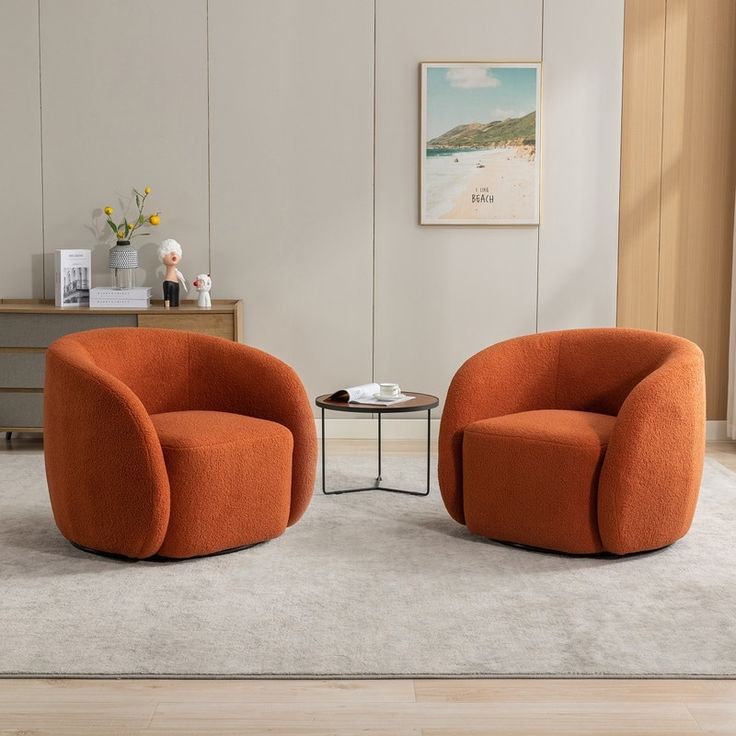
Arm Chair Buying Guide: Features to Consider Before Purchase

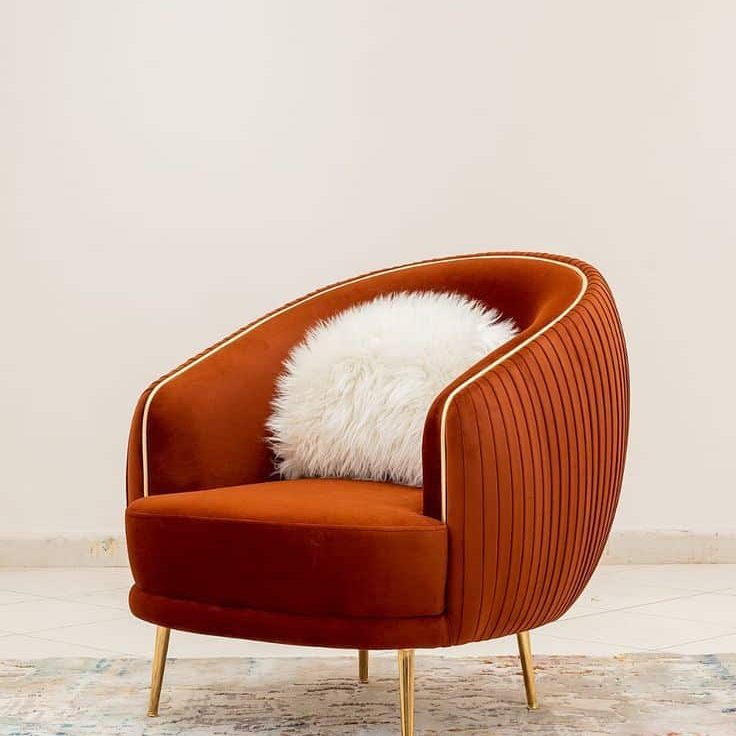
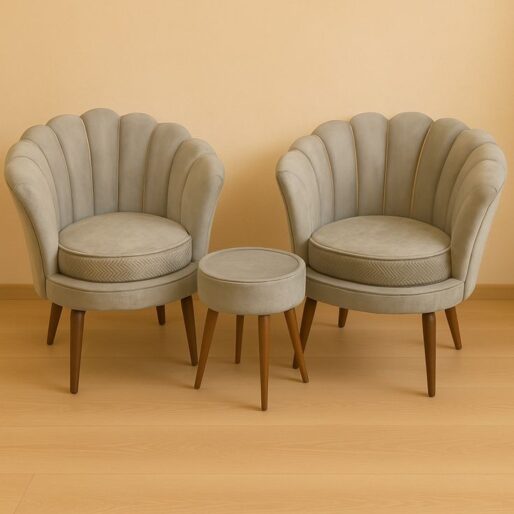
Selecting the right seating furniture plays a major role in improving both comfort and interior design. Arm chairs are one of the most versatile furniture pieces that add style, functionality, and relaxation to living rooms, bedrooms, and lounge spaces. With numerous designs, materials, and features available, choosing the right arm chair requires careful consideration. Understanding important features before purchasing helps homeowners select furniture that fits both their comfort needs and interior décor.

A well-designed armchair can enhance seating arrangements while serving as a decorative element in any room. Whether used as additional seating, a reading chair, or a statement furniture piece, selecting the right arm chair ensures long-term comfort and durability.
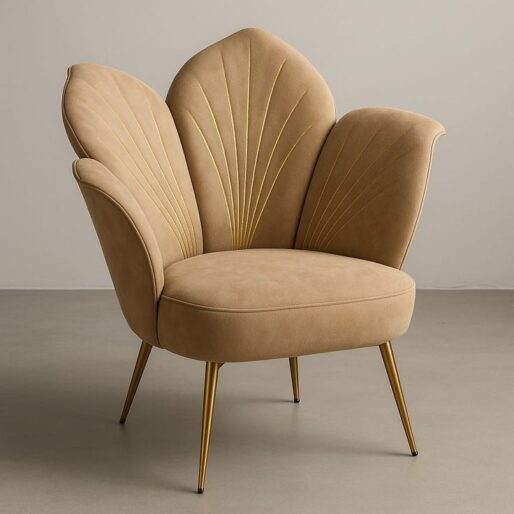
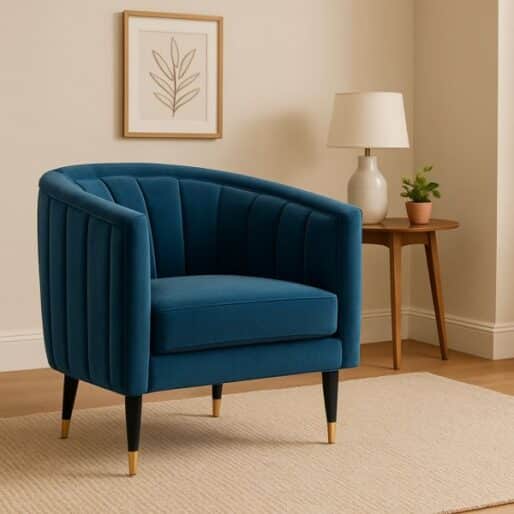
Comfort and Ergonomic Design

Comfort is one of the most important factors when choosing an arm chair. Since arm chairs are often used for relaxation, reading, or lounging, ergonomic support should be a top priority.

Key comfort features to consider include:

  1. Proper backrest height for spine support

  2. Comfortable armrest positioning for relaxed seating

  3. Cushioned seating with balanced softness and firmness

  4. Adequate seat depth for better posture and comfort

Choosing an arm chair with good ergonomic support helps reduce body strain and improves daily seating comfort.

Size and Space Compatibility

Selecting the right size arm chair ensures it fits well within your room layout without overcrowding the space. Oversized chairs may dominate small rooms, while smaller chairs may not provide adequate comfort.

Important size considerations include:

• Measure available floor space before purchase
• Ensure sufficient walking space around the chair
• Match chair height with surrounding furniture
• Choose compact designs for small rooms

Proper size selection helps maintain room balance and improves overall functionality.
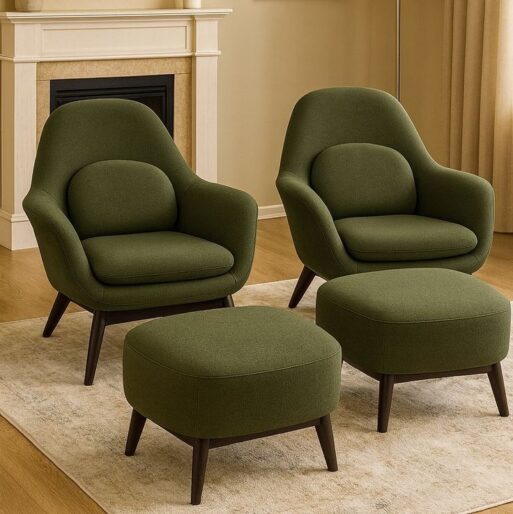
SweetHome

Upholstery and Material Selection

Arm chairs are available in various upholstery materials, each offering different levels of comfort, durability, and style.

Popular upholstery choices include:

• Fabric Upholstery – Soft, cozy, and available in various colors and textures
• Leather Upholstery – Elegant, durable, and easy to maintain
• Velvet Upholstery – Adds luxury and visual richness to interiors
• Synthetic Materials – Affordable and easy to clean

Selecting the right upholstery ensures durability while matching the chair with existing room décor.

Frame and Structural Durability

The internal frame of an arm chair determines its strength and longevity. Choosing high-quality materials ensures long-term performance and stability.

Common frame materials include:

• Solid wood frames for durability and premium finish
• Engineered wood frames for lightweight and cost-effective designs
• Metal frames for modern and industrial-style interiors

A strong frame supports daily usage and prevents early wear and tear.

Style and Design Considerations

Arm chairs are available in various styles to match different interior themes. Selecting the right design helps enhance overall room aesthetics.

Popular arm chair styles include:

• Modern minimalist designs for contemporary interiors
• Classic and traditional designs for timeless elegance
• Recliner arm chairs for enhanced relaxation
• Accent arm chairs for decorative statement pieces

Choosing a design that complements existing furniture helps create a cohesive interior look.

Color and Texture Coordination

Color and texture play an important role in maintaining visual harmony within a room. Neutral shades offer a timeless and elegant appearance, while bold colors can create a focal point in interior design.

Homeowners should consider matching arm chair colors with sofas, curtains, or wall tones to maintain design consistency.

Placement Ideas for Arm Chairs

Proper placement enhances both functionality and room layout. Some effective placement ideas include:

  1. Positioning arm chairs beside sofas to create balanced seating arrangements

  2. Placing chairs near windows for reading corners

  3. Using arm chairs in bedrooms for additional seating

  4. Creating cozy lounge spaces with side tables and floor lamps

Strategic placement improves comfort while enhancing room aesthetics.

Making the Right Arm Chair Selection

Choosing the perfect arm chair requires evaluating comfort, size, materials, style, and functionality. By considering these features, homeowners can select seating furniture that enhances relaxation and interior design. Arm chairs continue to remain a popular furniture choice because of their versatility and decorative appeal.

With thoughtful selection and placement, an arm chair can transform living spaces into comfortable, stylish, and inviting environments while providing practical everyday seating solutions.
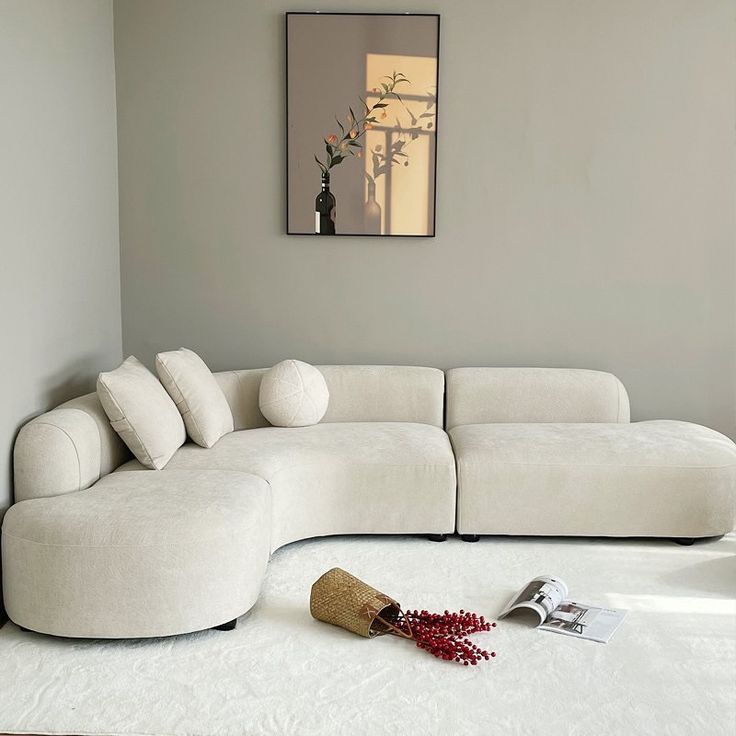
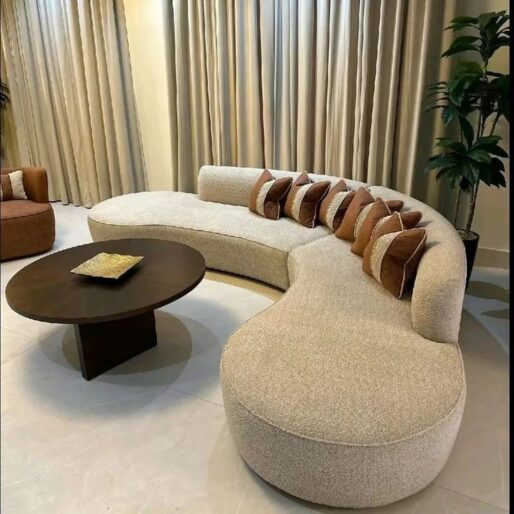
 

Corner Sofa vs L-Shaped Sofa: Which One Should You Choose?

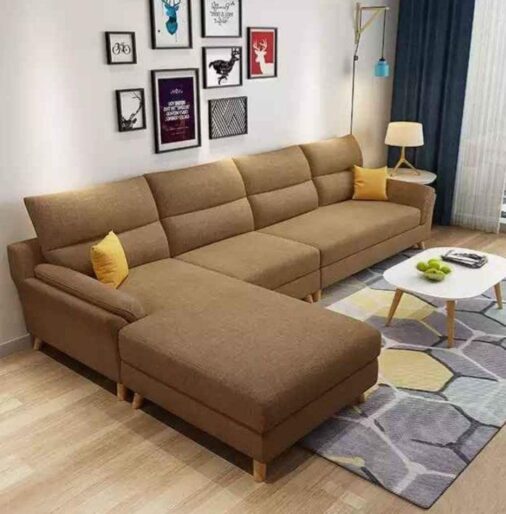
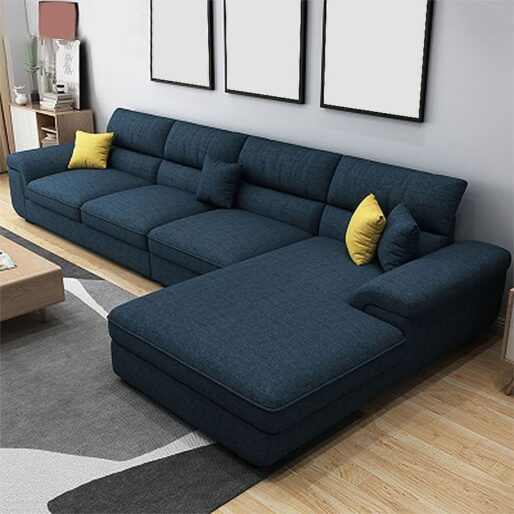
Choosing the right sofa for your living room is essential for both comfort and interior aesthetics. With so many designs available, it can be confusing to decide between a corner sofa and an L-shaped sofa. Both types offer spacious seating and modern style, but understanding their differences, advantages, and ideal usage can help you make an informed decision.

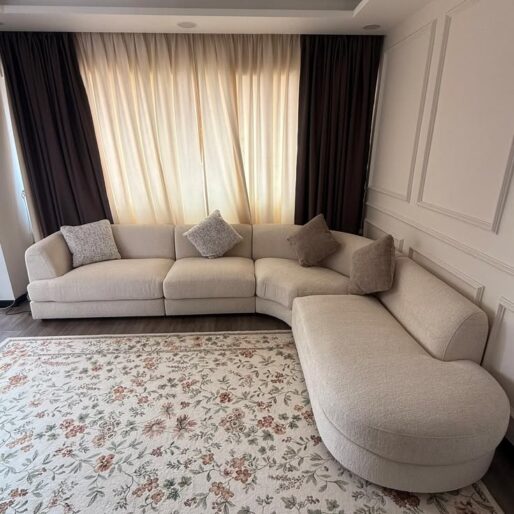
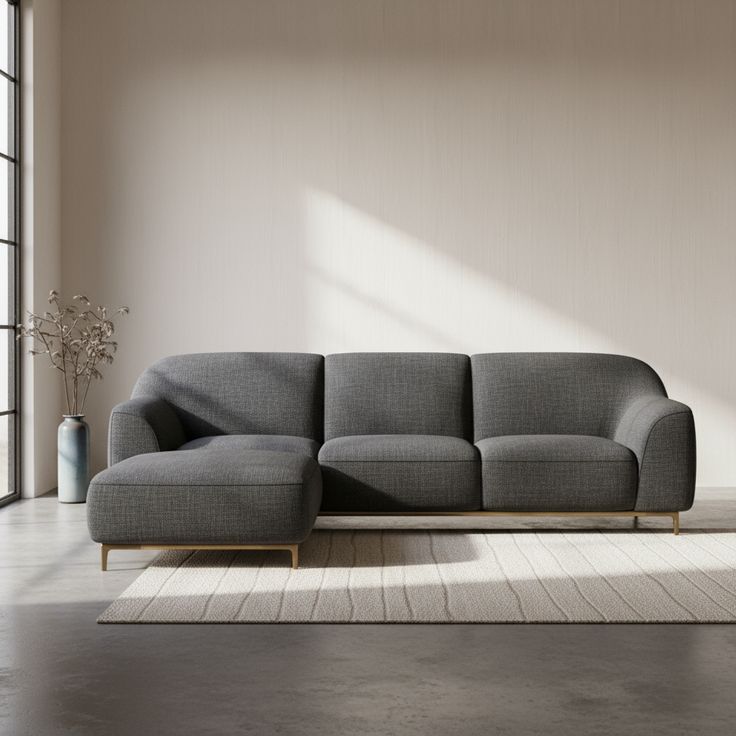
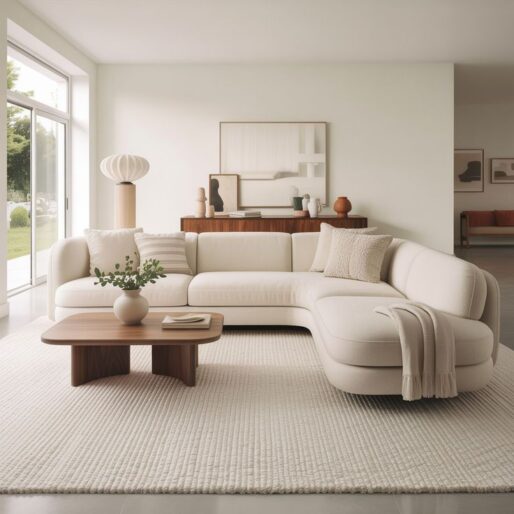
Many homeowners today also explore a modular sectional sofa option, which combines flexibility and customization to suit different living spaces. Corner sofas are compact seating units designed to fit neatly into room corners. They are ideal for maximizing seating in small to medium-sized rooms without overwhelming the space. L-shaped sofas, on the other hand, are larger configurations that extend along two walls or form an “L” shape in the room. They are perfect for open-plan living areas or larger rooms where more seating is required.

Space Considerations

Proper space planning is a key factor when choosing between corner and L-shaped sofas.

  1. Corner Sofas:

    • Fit snugly into small corners, saving floor space

    • Ideal for compact apartments or bedrooms used as lounge areas

    • Often come with a straight or slightly angled design

  2. L-Shaped Sofas:

    • Require larger floor space due to extended seating

    • Can define separate zones in open-plan living areas

    • Perfect for families or those who entertain guests frequently

Understanding your room dimensions ensures that your sofa enhances the layout rather than crowding it.

Comfort and Seating Capacity

Both corner and L-shaped sofas provide comfortable seating, but their capacity differs:

  • Corner Sofas: Usually accommodate 3–5 people comfortably, making them ideal for small families or couples.

  • L-Shaped Sofas: Can seat 5–7 people depending on size, offering more flexibility for social gatherings.

Choosing a modular sectional sofa allows homeowners to adjust seating sections according to room size, making it easy to customize for comfort and functionality.

Design and Style Options

Modern interiors often prioritize both style and practicality. Corner and L-shaped sofas come in a variety of materials, colors, and finishes to match your décor.

  • Fabric Upholstery: Soft, cozy, and available in many patterns

  • Leather Upholstery: Sleek, modern, and easy to clean

  • Sectional Designs: Modular pieces that allow for flexible arrangement

  • Storage Options: Some sofas include under-seat storage for blankets and cushions

The choice of materials and finishes impacts both the sofa’s durability and the overall look of your living room.


Functionality and Flexibility

Functionality is another factor to consider:

  • Corner Sofas: Perfect for creating cozy corners, small entertainment areas, or reading nooks

  • L-Shaped Sofas: Ideal for larger spaces and versatile layouts

  • Modular Sectional Sofas: Can be rearranged to suit evolving room needs, perfect for homes that require flexible seating arrangements

Modular units are especially useful in spaces where you may need to change the configuration periodically, such as for parties or home renovations.

Design and Style Options

Modern interiors often prioritize both style and practicality. Corner and L-shaped sofas come in a variety of materials, colors, and finishes to match your décor.

  • Fabric Upholstery: Soft, cozy, and available in many patterns

  • Leather Upholstery: Sleek, modern, and easy to clean

  • Sectional Designs: Modular pieces that allow for flexible arrangement

  • Storage Options: Some sofas include under-seat storage for blankets and cushions

The choice of materials and finishes impacts both the sofa’s durability and the overall look of your living room.

Functionality and Flexibility

Functionality is another factor to consider:

  • Corner Sofas: Perfect for creating cozy corners, small entertainment areas, or reading nooks

  • L-Shaped Sofas: Ideal for larger spaces and versatile layouts

  • Modular Sectional Sofas: Can be rearranged to suit evolving room needs, perfect for homes that require flexible seating arrangements

Modular units are especially useful in spaces where you may need to change the configuration periodically, such as for parties or home renovations.


Placement Tips

Where you place your sofa can greatly affect the room’s flow and functionality:

  • Place corner sofas in the room’s least-used corner to maximize space

  • Position L-shaped sofas to separate the living and dining areas in open-plan layouts

  • Use complementary furniture, like coffee tables or side tables, to balance the room

  • Ensure there’s enough clearance for walking around the sofa without obstruction

Proper placement enhances both comfort and visual appeal.

Conclusion

Choosing between a corner sofa and an L-shaped sofa depends on your room size, seating needs, and interior style. Corner sofas are excellent for compact spaces and cozy seating arrangements, while L-shaped sofas offer generous seating and open-plan versatility. A modular sectional sofa provides the best of both worlds, offering customization, flexibility, and modern style.

By understanding the differences, room requirements, and available design options, you can select a sofa that combines comfort, functionality, and aesthetic appeal, transforming your living room into a stylish and inviting space.

Space-Saving Advantages of Wall Panel Beds in Compact Bedrooms

Compact bedrooms often pose challenges when it comes to furniture arrangement and efficient space utilization. Traditional bed designs can take up significant floor space, leaving little room for movement or additional furniture. Wall panel beds offer an innovative solution, combining style, functionality, and space efficiency. Understanding the space-saving wall panel beds can help homeowners make informed decisions for modern small-bedroom layouts.

Many homeowners today also explore wall beds as a practical option. These beds fold vertically or horizontally into the wall, freeing up valuable floor space for daily activities, study areas, or extra seating. Their multifunctional design makes them an ideal choice for apartments, guest rooms, and compact living spaces.

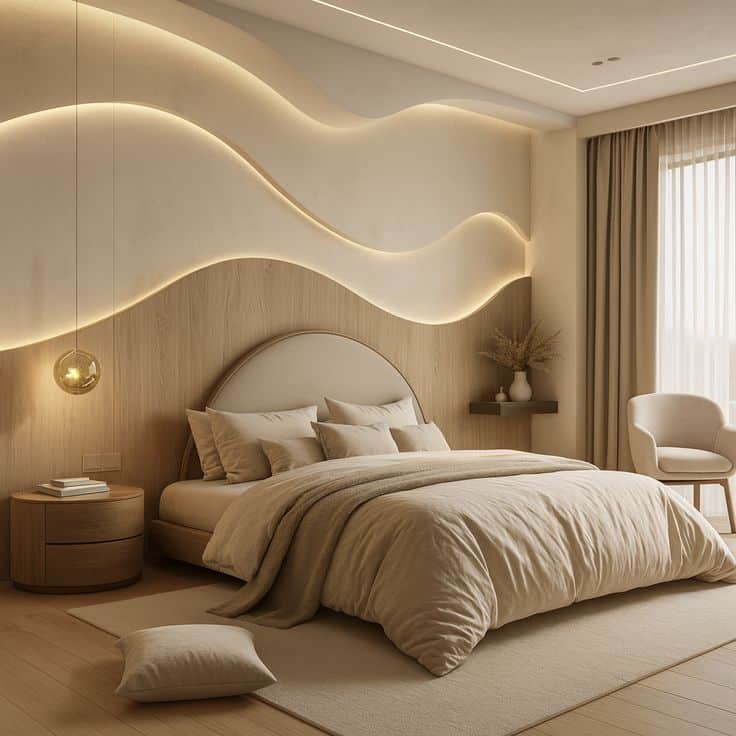
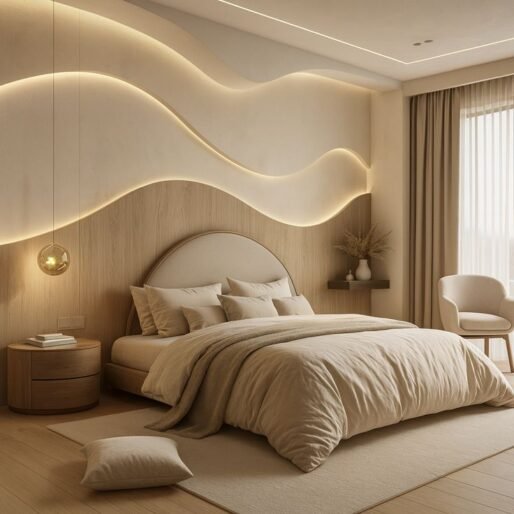
Cozy Bedroom Lighting

How Wall Panel Beds Save Space

Wall panel beds are specifically designed to maximize floor space without compromising comfort. They allow a full-sized bed to be stored away when not in use, making rooms appear larger and more organized.

Key benefits include:

  1. More Usable Floor Space – Folding the bed into the wall instantly creates extra space for walking, exercise, or other furniture.

  2. Multifunctional Living Areas – Rooms can double as guest bedrooms, home offices, or lounges without adding clutter.

  3. Compact Storage Solutions – Many wall panel beds include built-in storage such as drawers, shelves, and cabinets to further reduce the need for extra furniture.

  4. Easy Access and Convenience – Modern wall beds are equipped with smooth mechanisms, allowing users to fold or pull the bed with minimal effort.

These advantages make wall panel beds a perfect solution for small apartments, studios, or multi-purpose rooms.

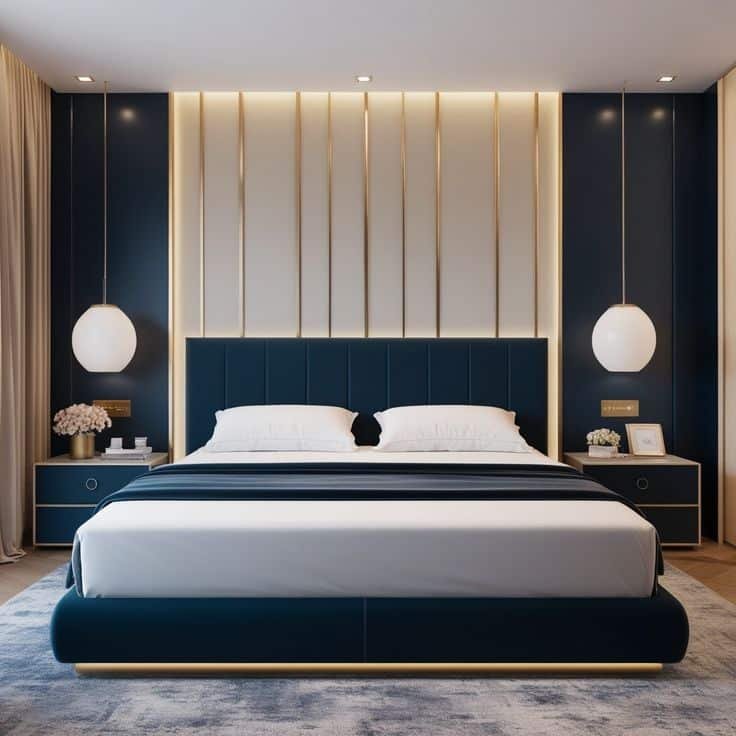
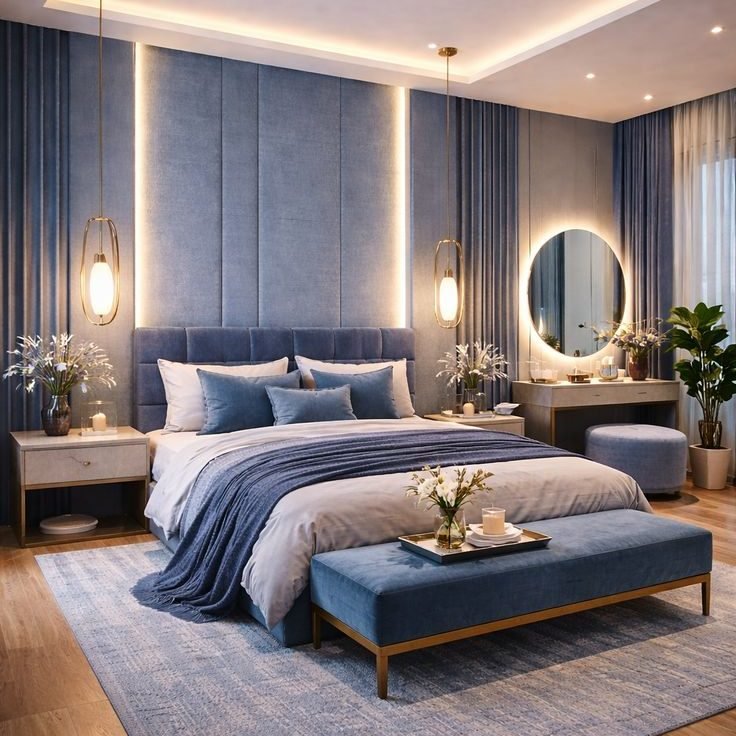
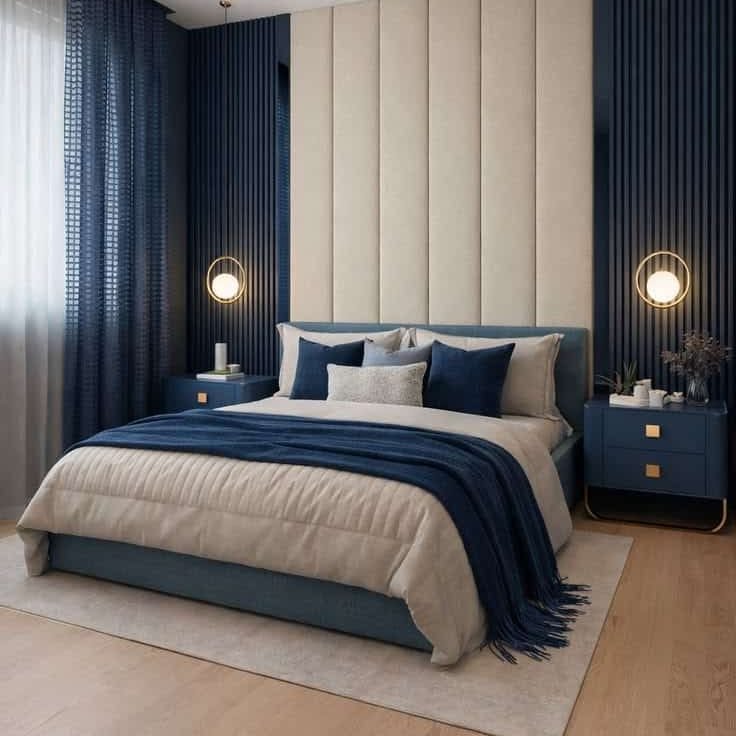
Luxury Blue Bedroom Design
download (68)

Design Options for Wall Panel Beds

Wall panel beds come in a variety of designs to match different interior styles. Choosing the right design ensures that the bed complements the room’s décor while enhancing functionality.

Popular design features include:

Murphy-style wall beds – Fold vertically into a cabinet or wall unit
Horizontal wall beds – Slide out from the side, ideal for rooms with low ceilings
Upholstered wall beds – Offer comfort and a premium look
Integrated shelving or desks – Combine sleeping, working, and storage space

By selecting a design that fits the room layout and lifestyle, homeowners can make the most of both aesthetics and practicality.

Materials and Durability

High-quality materials are essential for wall panel beds to ensure safety, longevity, and stability. Common materials include:

• Engineered wood or MDF for lightweight but durable frames
• Solid wood for a premium and robust structure
• Laminated or veneer finishes for scratch resistance and easy maintenance
• Upholstered panels for added comfort and style

Choosing durable materials ensures that wall beds remain functional and safe for long-term use.

Placement Tips for Compact Bedrooms

Even with space-saving features, proper placement is crucial for maximizing usability. Consider the following:

  1. Leave enough clearance around the bed when folded down.

  2. Place the bed near a wall with minimal obstructions for easy operation.

  3. Coordinate with other furniture like desks, sofas, or wardrobes to maintain flow.

  4. Use lighting strategically to highlight the bed area without interfering with folding mechanisms.

Correct placement enhances both safety and convenience in compact living spaces.

Additional Advantages of Wall Panel Beds

Beyond space-saving wall panel beds offer additional benefits that improve overall bedroom functionality:

• Reduce visual clutter and create a minimalist look
• Increase flexibility for multifunctional rooms
• Ideal for guest rooms that are used infrequently
• Enhance property value with smart and innovative design solutions

Conclusion

For compact bedrooms, wall panel beds provide a practical and stylish solution. They combine comfort, durability, and functionality while freeing up valuable floor space. Integrating a wall beds solution allows homeowners to maximize usable space, maintain organization, and create a flexible living environment. With thoughtful design and proper placement, wall panel beds can transform small bedrooms into efficient, modern, and visually appealing spaces.

Wall Mounted Dressing Table Buying Guide: Features to Consider

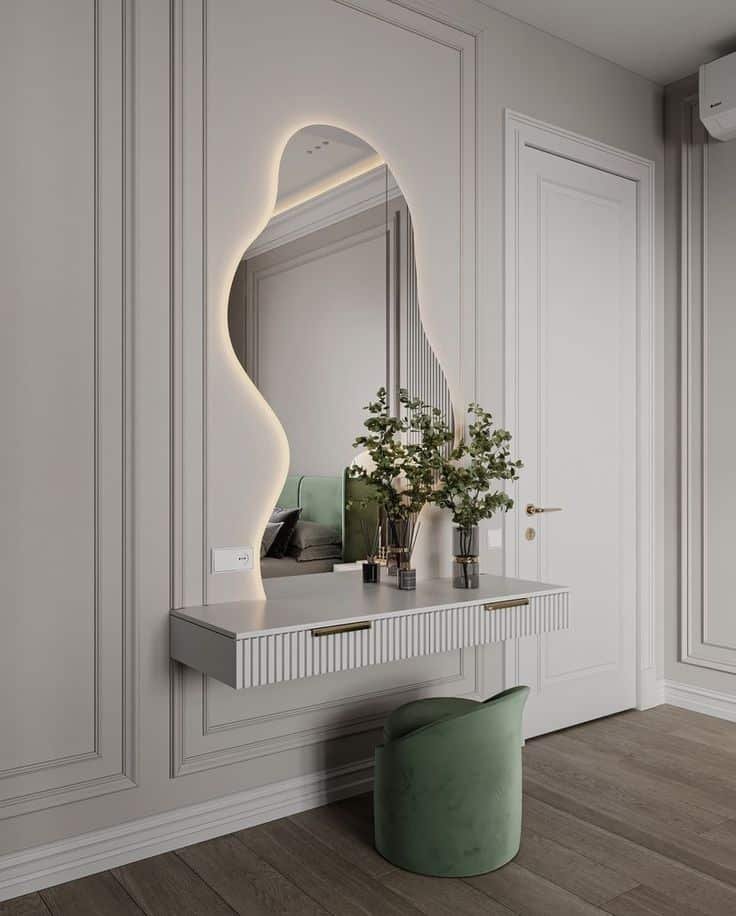
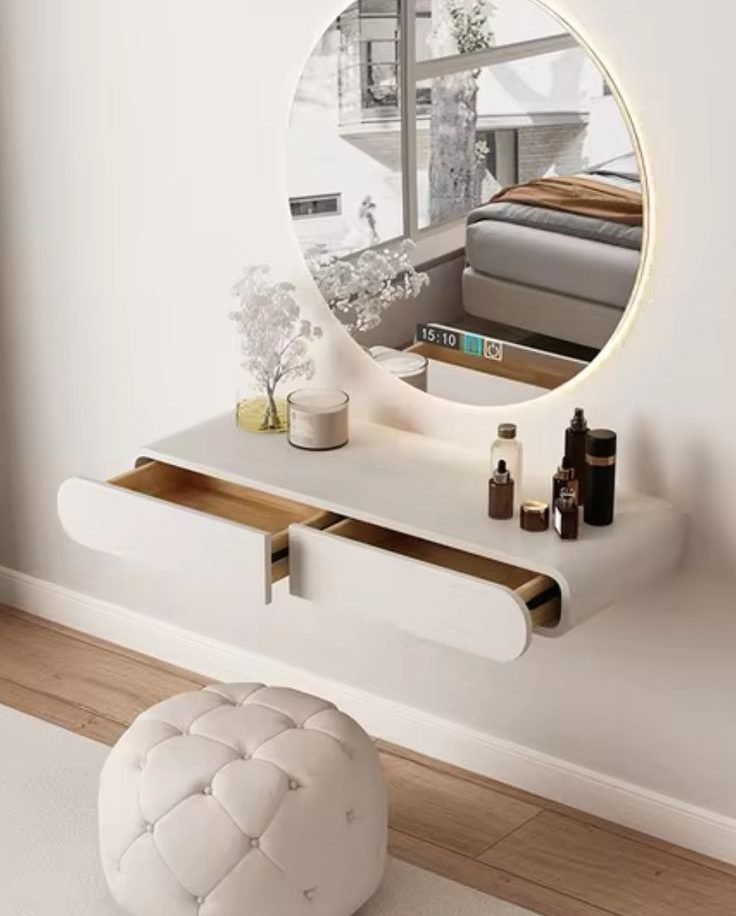
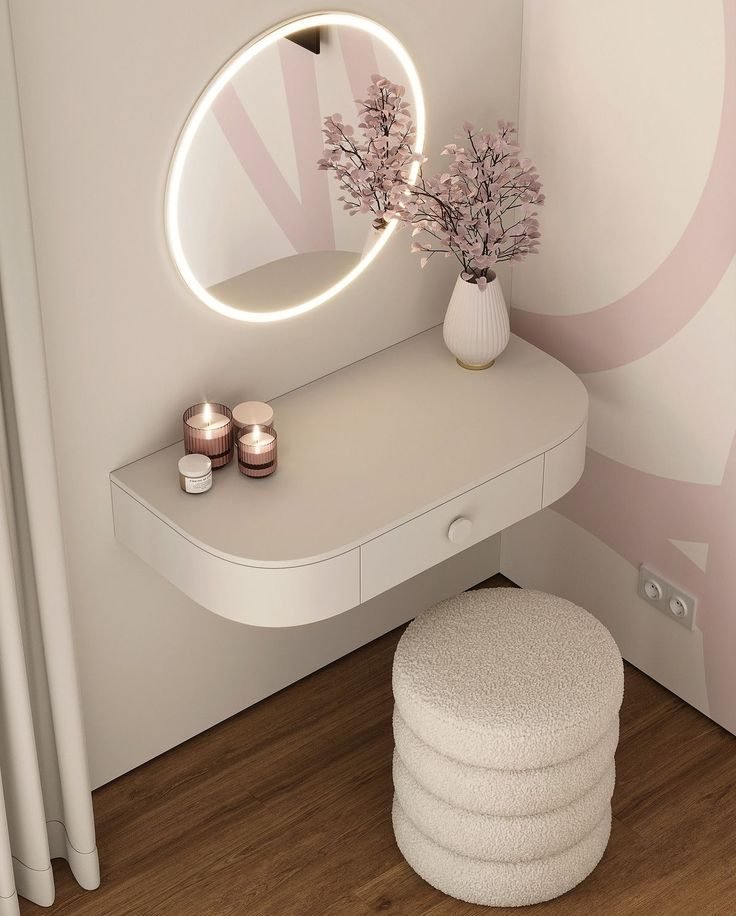
Modern homes demand furniture that combines style, practicality, and efficient space utilization. Wall mounted dressing tables have become increasingly popular because they offer a sleek and compact solution for daily grooming needs. These dressing tables help save floor space while maintaining an elegant and organized bedroom appearance. Choosing the right wall mounted dressing table requires careful consideration of design, storage, durability, and functionality.

A well-designed bedroom dressing table can improve daily convenience while enhancing interior aesthetics. Since wall mounted options are fixed to the wall, selecting the right model ensures long-term usability and proper space planning. Understanding essential features before purchasing helps homeowners make a smart and practical investment.


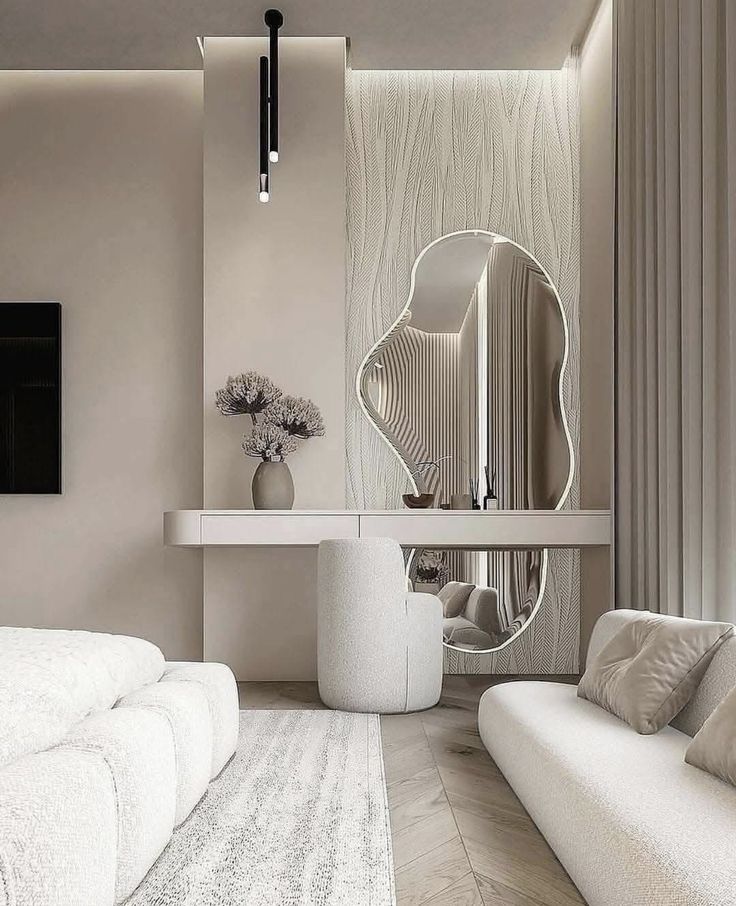
dresser1

Importance of Wall Mounted Dressing Tables

Wall mounted dressing tables are designed to maximize space efficiency while providing essential storage and grooming functionality. They are ideal for small bedrooms, apartments, and modern minimalist interiors where space management is a priority.

These dressing tables create a clutter-free environment and offer a streamlined look. Their elevated design also makes cleaning easier and helps maintain a neat bedroom layout.

Size and Space Planning

Before selecting a wall mounted dressing table, measuring the available wall space is essential. Proper size selection ensures the dressing table fits comfortably without overwhelming the room.

Key measurement considerations include:

  1. Check the wall width where the table will be installed.

  2. Ensure enough clearance space for seating or movement.

  3. Select a height that allows comfortable mirror usage.

  4. Consider nearby furniture placement such as beds or wardrobes.

Choosing the correct size helps maintain visual balance and improves daily usability.

Material and Durability

Wall mounted dressing tables should be made from strong and durable materials to ensure long-lasting performance. Since the unit is fixed to the wall, structural stability is essential.

Common material options include:

• Engineered wood for durability and modern design appeal
• Solid wood for premium strength and long-term reliability
• Laminated finishes for scratch resistance and easy maintenance
• Gloss or matte finishes for enhanced aesthetic appeal

Choosing high-quality materials ensures that the dressing table remains functional and visually appealing for years.

Seating and Comfort Considerations

Even though wall mounted dressing tables save floor space, comfortable seating should not be overlooked. Many homeowners pair these tables with compact stools or foldable seating options.

Important comfort factors include:

• Proper table height for seated usage
• Enough leg space beneath the table
• Lightweight seating for easy movement
• Cushioned stools for better comfort

Balancing comfort and space efficiency improves overall usability.

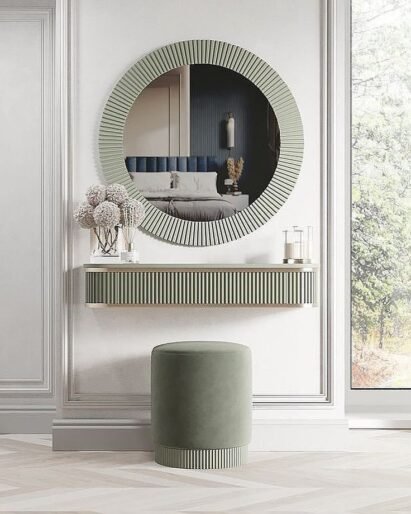
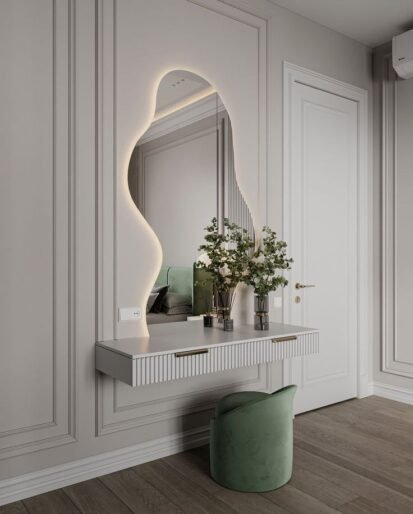
Wall-Mounted Dressing Tables
Beautiful 🩷

Storage Features to Look For

Storage plays an important role in dressing table functionality. Wall mounted dressing tables often include drawers, shelves, or compartments that help organize grooming essentials.

Important storage features include:

• Drawers for storing cosmetics and accessories
• Open shelves for frequently used items
• Hidden compartments for valuables
• Compact organizers for small beauty products

Selecting the right storage configuration helps keep the space organized and easily accessible.

Mirror Design and Placement

The mirror is one of the most important components of any dressing table. Choosing the right mirror design improves convenience and enhances overall aesthetics.

Popular mirror options include:

• Fixed mirrors for a sleek and minimal look
• Foldable mirrors for flexible usage
• Sliding mirrors with hidden storage behind them
• LED mirrors for better lighting and grooming visibility

Proper mirror placement ensures comfortable viewing angles and enhances the dressing experience.

Lighting and Functionality

Good lighting enhances dressing table functionality and improves grooming accuracy. Wall mounted dressing tables can be paired with built-in or external lighting solutions.
Recommended lighting options include:

• LED strip lighting around mirrors
• Wall-mounted lights above the dressing table
• Adjustable lighting brightness for different grooming needs
• Warm lighting tones for a relaxing bedroom atmosphere

Proper lighting improves convenience and adds decorative value.

Installation and Safety Factors

Since wall mounted dressing tables are attached directly to walls, professional installation is highly recommended. Secure installation ensures stability and prevents potential damage.

Important installation considerations include:

• Checking wall strength and support
• Using high-quality mounting hardware
• Ensuring proper weight distribution
• Installing at an ergonomic height for comfortable usage

Safe installation guarantees durability and long-term performance.

Creating a Stylish and Functional Bedroom Setup

Choosing the right wall mounted dressing table involves balancing design, storage, comfort, and durability. By evaluating space availability, material quality, and functional features, homeowners can select furniture that enhances both practicality and bedroom aesthetics.

Wall mounted dressing tables continue to grow in popularity due to their modern appearance and space-saving advantages. With thoughtful selection and proper installation, they can transform bedrooms into organized, stylish, and highly functional living spaces.

Queen Size Bed Dimensions in CM: Complete Size Guide

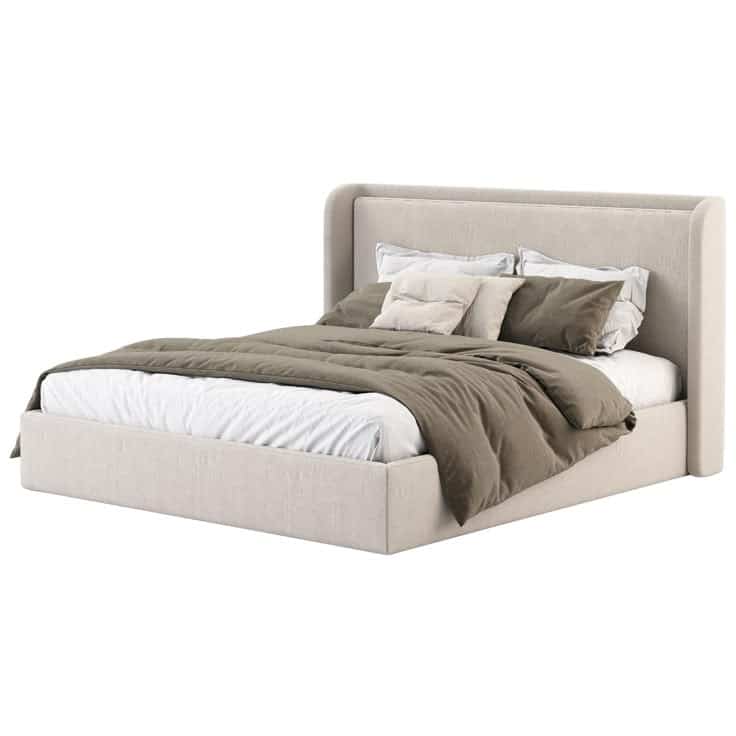
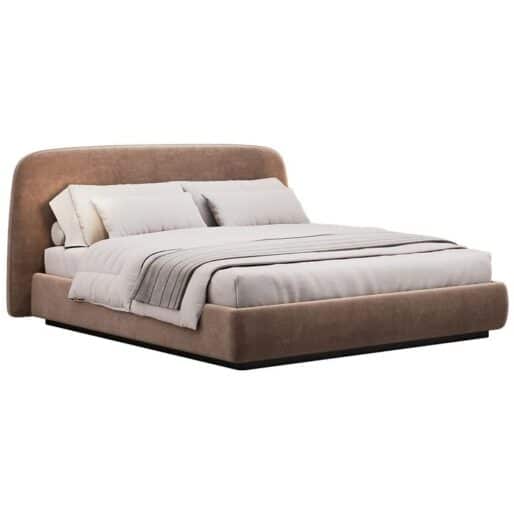
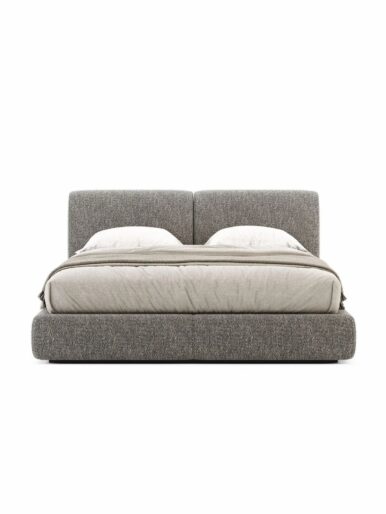
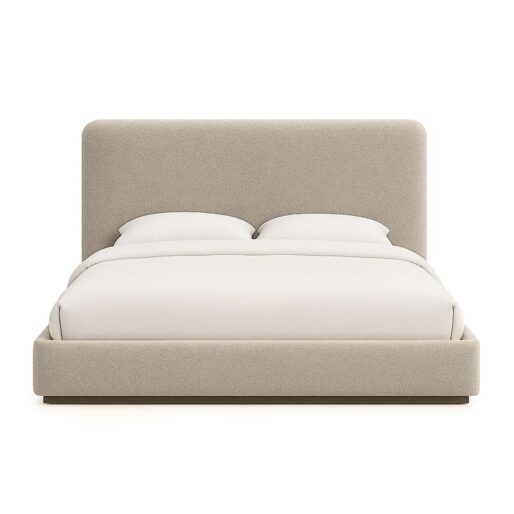
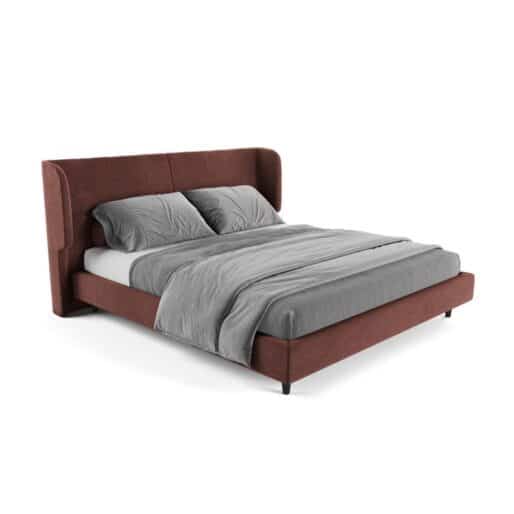
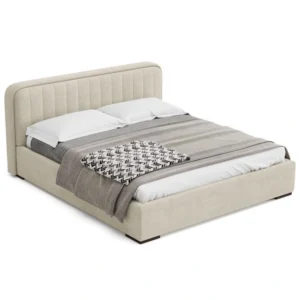
Choosing the right bed size is essential for maintaining comfort, functionality, and bedroom aesthetics. Among various bed sizes available, queen size beds remain one of the most popular choices for modern homes. They provide sufficient sleeping space while fitting comfortably in most bedrooms. Understanding queen size bed dimensions in cm helps homeowners plan furniture placement, mattress selection, and room layout effectively.

Many homeowners today also explore customized-bed-dubai options when selecting bedroom furniture, as customization allows better space utilization and design flexibility. Knowing standard queen size bed measurements makes it easier to decide whether a ready-made or customized bed is suitable for your space and lifestyle needs.

Standard Queen Size Bed Dimensions in CM

A standard queen size bed typically measures:

• Width: 150 cm to 160 cm
• Length: 200 cm

These dimensions provide enough sleeping space for two adults while maintaining comfort and freedom of movement. The size is ideal for couples, guest rooms, and medium-sized bedrooms. However, slight variations may occur depending on the bed frame design, headboard thickness, and structure.

Why Queen Size Beds Are Popular

Queen size beds offer a balanced combination of comfort and space efficiency. They are large enough to accommodate two sleepers comfortably without occupying excessive bedroom space.

Some key advantages include:

  1. Suitable for couples and single sleepers who prefer extra space.

  2. Fits well in most modern bedroom layouts.

  3. Wide availability of mattresses and bedding accessories.

  4. Offers flexibility in bedroom furniture arrangement.

Because of these benefits, queen beds are often considered a practical and versatile sleeping solution.

Room Size Requirements for Queen Size Beds

Before purchasing a queen size bed, it is important to ensure your bedroom has enough space to accommodate the furniture comfortably. Proper spacing improves movement and overall room functionality.

Recommended room size guidelines include:

• Minimum bedroom size: 300 cm x 300 cm
• Ideal clearance around bed: At least 60–75 cm walking space
• Additional space for side tables and wardrobes

Planning your room layout before selecting a bed helps prevent overcrowding and maintains visual balance.

Mattress Size Compatibility

Choosing the correct mattress is just as important as selecting the bed frame. A mattress that matches queen bed dimensions ensures proper support, durability, and sleeping comfort.

Standard queen mattress dimensions usually align with:

• Width: 150 cm to 160 cm
• Length: 200 cm

When purchasing mattresses, homeowners should also consider thickness levels based on comfort preferences and bed frame design.

Queen Size Bed vs Other Bed Sizes

Comparing queen beds with other common bed sizes helps homeowners make better decisions based on space and comfort requirements.

• Double Beds: Slightly smaller and suitable for single sleepers or compact bedrooms.
• King Size Beds: Larger sleeping area but require more room space.
• Single Beds: Ideal for children or small bedrooms.

Queen size beds provide a balanced solution between space efficiency and sleeping comfort, making them one of the most practical options.
 

Furniture Placement Around Queen Beds

Proper furniture placement enhances bedroom functionality and visual appeal. When designing a bedroom layout around a queen size bed, homeowners should consider both storage and movement space.

Helpful placement tips include:

• Position bedside tables evenly on both sides for symmetry.
• Leave enough clearance for wardrobes and dressing tables.
• Avoid placing bulky furniture too close to the bed.
• Choose storage beds if additional storage is required.

Strategic placement improves convenience while maintaining an organized bedroom environment.

Storage Options in Queen Size Beds

Modern queen size beds often include built-in storage features that improve space utilization. Storage beds are especially beneficial for apartments and compact homes where additional storage is necessary.

Common storage options include:

• Hydraulic lift storage
• Drawer storage under the bed
• Box storage compartments

These features allow homeowners to store bedding, seasonal clothing, and other essentials without adding extra furniture.

Choosing the Right Queen Size Bed for Your Needs

Selecting the perfect queen size bed involves evaluating bedroom space, storage requirements, and comfort preferences. Homeowners should consider bed frame material, mattress compatibility, and interior style before making a purchase decision.

Understanding queen size bed dimensions in cm helps create a well-balanced bedroom layout that supports both comfort and design appeal. With proper planning and furniture selection, queen beds can transform bedrooms into comfortable, stylish, and functional living spaces.


It's estimated that more than 5 billion people have mobile devices, which represents approximately 94% of the population of advanced economies and 83% of emerging economies, according to Pew Research Center

Back to Top
Product has been added to your cart
Compare (0)